If you have been following my blog, you’ll know that most of the time, I don’t think about running, when I am running. I’ve forwarded the proposition that the more reasons you have to run, and the more that you have to think about while running, the easier it is to stick to running. Does it follow then that since I run A LOT, a lot of what I think about is not about running? Possibly.
Some of those thoughts and activities that occupy me or take place on the run include listening to music and audio books, watching television, list-making, photography, shopping, meal-planning and recently, I’ve become adept at checking my Blackberry while running on a treadmill.
The Pain Gain
However faster running, involving effort, discomfort and pain requires that thoughts be focused on running and it is helpful to develop positive mental strategies to deal with these more challenging physical sensations. At the moment, faster running is about 40 minutes out of the roughly 6-7 hours a week I run. A big part of what motivates me to push past the discomfort and pain is the knowledge of the health benefits of intense running. When you exercise at an intensity over the lactate threshold your body produces Exercise-Induced Growth Hormone Response (EIGR) the effect of which is double the benefit of aerobic exercise.
While running hard, I visually imagine EIGR secretions flowing through my body and soothing my joints. I also think of my heart, pumping vigorously sending blood in strong gushes throughout my circulatory system, massaging and cleansing my arteries. While these images may not be sound biology, you get the picture, it is all about the importance of positive images.
Knee Joint Facsimile
My husband has been having knee trouble for nearly two years. As a joke, I gave him a key chain with a replica of a knee joint. As time passes, I’m thinking that this rattling, fragile looking knee joint may not inspire confidence in recovery and only lends fuel to the argument that the knee joint is poorly designed and engineered. Not the best mindset for visual images of healing and health.
The simple practice described in this quote by Jean Houston strikes me as wise, at the gut level.
“Try to spend a few moments each day holding a picture of your body and your mind in a state of splendid health.”
Today I lunched with a friend who is helping my husband and I organize a gala for a sponsorship program for AIDS-HIV orphans in Ethiopia. The program is supported mainly by volunteers, here in Canada is run by People to People Aid Organization, Canada Inc. . Thus I thought it would be timely to profile one of Ethiopia’s finest runners, Fatuma Roba who was the mother of five children when she won the Olympic gold medal.
Born in 1973 and raised in the village of Cokeji in Ethiopia’s mountainous southern region—also home to internationally known 10K champion Derartu Tulu—Roba was one of seven children born to a farming couple who raised and herded cattle. Like most children growing up in rural Africa, if she wanted to go somewhere, the quickest way to get there was to run. The daily run to and from her school—much of it going up and down hills—trained the young Roba in the art of sprinting. As a child her hero was 1960 and 1964 Olympic marathon champion Abebe Bikila, a fellow Ethiopian. After completing school, the five-foot-five-inch Roba decided to train to become a police officer after her performance at a national cross-country championship caught the attention of members of the Adis Ababa prison police athletic team.
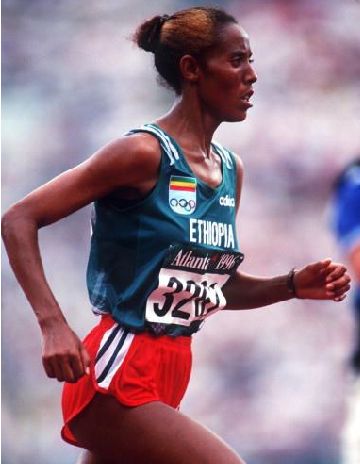
Fatuma Roba, Fluid Grace
Roba first gained an international profile in 1990 when at age 18 she placed fourth in the 3,000 meter and 10K competition during the African Championships. Three years later she decided to attempt the 26.2-mile marathon distance in her home town of Addis Ababa, and had reached a personal best time of 2 hours 35 minutes 25 seconds by 1995. Roba continued to reduce her marathon time throughout the spring of 1996, helped along by the coaching of Yilma Berta. To train to excel at the 26.2-mile marathon distance, the 22-year-old Roba logged an average of 125 miles a week, most of it at high altitude, thereby forcing her body to use its resources of oxygen efficiently. She ran and won two marathons early in 1996, the first in January at Marakech and the second in Rome, Italy, two months later.
When Roba joined the field of the 1996 Olympic women’s marathon in Atlanta, Georgia, in July of 1996, she was ranked only 29th among the elite women athletes assembled there. Surprising almost all onlookers of that years’ Summer Games, she managed consistent five-minute miles, gained the lead by mile 13, and left behind Japanese runner Yuko Arimori, who had won the silver at the 1992 Summer Olympics in Barcelona, Spain. At mile 19 timers clocked her race pace at 5:21; relaxed and alert, Roba waved as she passed, the crowds cheering on the first woman in the pack. She went on to cross the line in 2:26:05, her lead a remarkable two minutes. “This is not only a special thing for me but also for my country and all African women,” Roba was quoted as commenting by Amanda Mays in the Philadelphia Inquirer. “The Ethiopian women are coming up in the marathon. This was the breakthrough and now we are ready to challenge the others.”
Roba’s success in Atlanta was balanced by an equally notable performance in 1997 at the 101st Boston Marathon. She gained and held an easy lead by mile 20 to win in 2:26:23. The first African woman ever to win the historic Boston race, Roba bested an elite field that included defending champion Uta Pippig, Japan’s Junko Asari, and South African runners Colleen de Reuck and Elana Meyer. “She ran with the same smooth stride and placid, dispassionate look on her face that she carried through the Olympic race,” reported Runnersworld.com. “Race commentator (and fellow Olympic marathon champion) Frank Shorter called her ‘The most relaxed-looking runner I have ever seen.'” Roba’s performance at the World Championship Marathon held in Athens, Greece, the following fall was a disappointment when she was forced to leave the course after being injured.
One for Ethiopia!
In 1999 the 25-year-old Roba took her third straight win at Boston, her time a personal best of 2:23:25 that set a new women’s overall course record. She won the silver at the Tokyo Marathon with a time of 2:27:05, but at the World Championships in Seville, Spain she finished a disappointing fourth. Roba’s winning streak at Boston ended in 2000, when she fell to third, barely losing the Boston gold to Kenyan runner Catherine Ndereba in one of the closest finishes in Boston Marathon history. Like Seville, the summer heat in Sydney, Australia proved hot enough to stall Roba, who finished a disappointing ninth at September 2000’s Sydney Olympics with a time of 2:27:38.
Like her hero Abebe Bikila, Roba has become a role model for African runners, women runners in particular. Her own younger sister, Sennaito Tekru, has followed in her path, and has embarked on a course as a competitive marathon runner. With her grace and seemingly effortless performances, Roba has broken the barrier for African women with her triumphs at both the Olympic Games and the Boston Marathon. Despite her disappointment in Sydney, she has continued to rank among elite women marathoners, handily winning the San Diego Marathon in 2001 with a time of 2:27:22.
Way back in the mid-eighties, I discovered the benefits of the easy week. I like to think of myself as one of the early adopters of this principle. The hard-easy day principle of training was well ingrained in anyone who had read articles from Runner’s World and Running Times but not so, the easy week.
One reason for experimenting with easy weeks was having spent half of the my first five years of running – injured. Out of necessity those first five years of running were all about trial and error and a lot of research into how the body works.
Fortunately, I was never prone to running through pain so I did not set myself up for chronic injuries. Just as the body carries the memory of hard-training and top fitness, making the road to achieving this easier, once traveled, my sense is that the body also remembers when the warning signal of pain has been ignored and the time for healing replaced by pushing through or masking the pain, a recipe for developing a lifetime chronic running injury.
The easy week, is all about distribution of effort. The hard weeks are more challenging and the easy weeks, well easier. Over the past decade or more, I was running similar weekly mileage to my peers, as an average, but thrown into the mix, would be some blockbuster weeks of say, over 100 miles and weeks with mileage lower than most “serious” marathoners would consider worthy. The concept of the easy week can be expanded to think of easy years. For example, I knew I wanted to be in the best shape of my life when I turned 50. Leading up to this key racing season, I mixed in an easy year just before. I was increasing fitness, however, I was banking all-out race efforts for when I changed age-groups.
Author - Dr. Jim Loehr
Maximizing performance through distribution of effort can be applied to how we manage our lives. I enjoyed The Power of Full Engagement written by Jim Loehr. He says, “Managing ënergy not time is the key to full engagement and optimal performance.” and I think this is relevant to marathon training as well as life management.
In spite of the faulty analogy Loehr uses to describe his insights, unflattering comparisons of marathoners with sprinters, the basics of what he says rings true for me. As for the analogy, Loehr is a tennis player and his sprinter versus marathoner metaphor demonstrates that he is unfamiliar with the training methods of high-performance distance runners who in fact, must draw on several energy systems to perform optimally.
In running and in life, knowing when is the best time to do what, and the energy demands or complexity of those tasks is a step towards improving RESULTS.
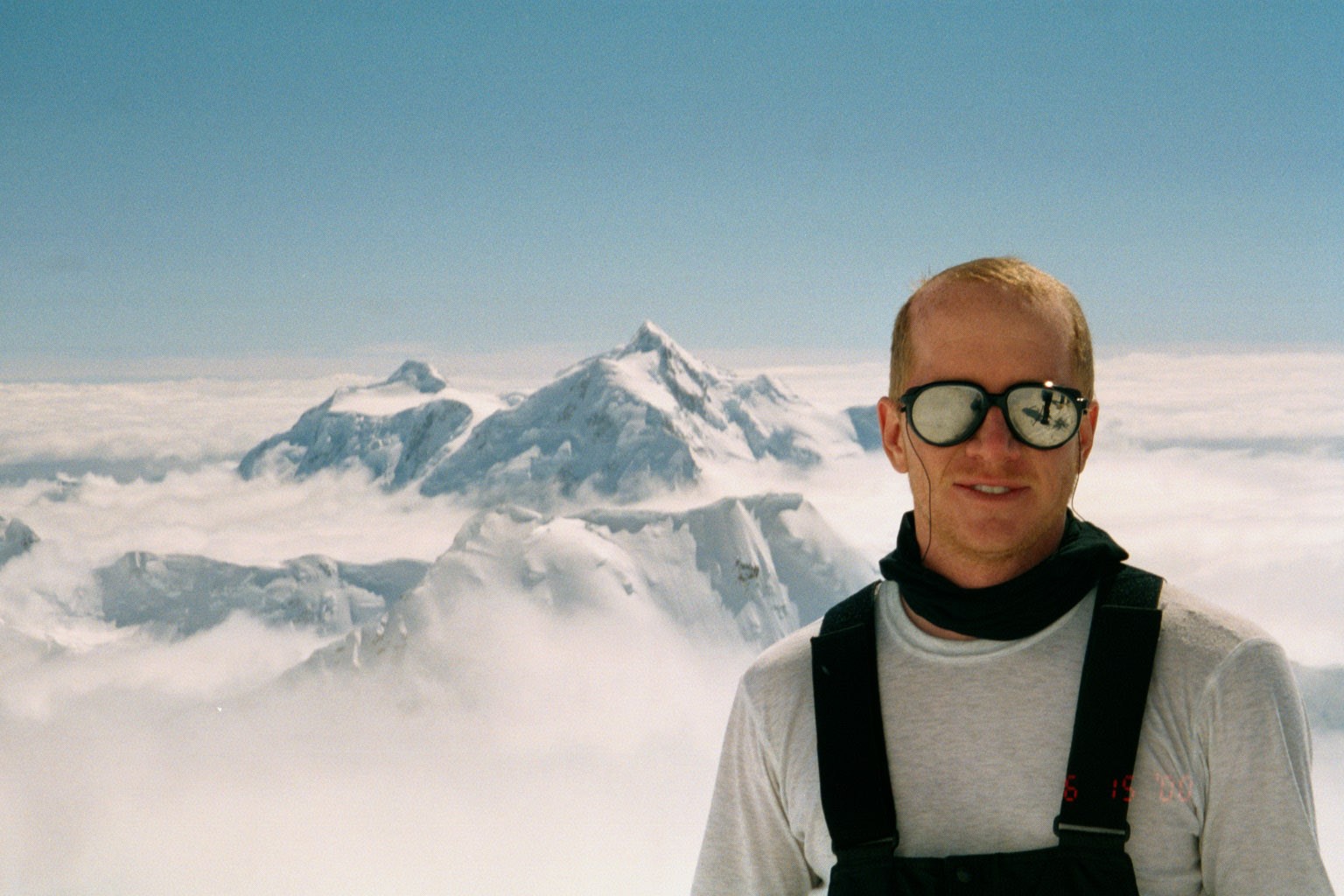
High on Denali, with Peaks of Mt. Hunter (I think) in Sight
Some deal with extreme weather better than others. Here is a photo of my nephew while on a spectacular snowy adventure, climbing Denali, the highest mountain in North America. As mentioned a couple of days ago, I did not fully appreciate the enormity of the feat until seeing a documentary on the topic. Kudos!
My son suggested that his cousin did not want to “crush my dreams” when I made my naive inquiries about trying this myself to which he politely replied, “It is a very technical climb”.
As for two Toronto runners, visiting Edmonton during a time which has the locals saying they can’t remember having this much snow, we escaped the chill with a third trip to Servus Place to run indoors. The drive there bore some similarities to a bobsled event, as we made our way through snow-packed, icy roads that seemed more like snowy channels with snow piled high, all round and well past car height.
I choose to run on the 250 meter indoor track rather than the treadmill. I had run on this track once before, a couple of summers back, barefoot. The track was deserted, making it easy to give barefoot running a try. Today, I realized upon setting foot on the track, that while too busy to run barefoot, it was to be a far better indoor running experience than the treadmill.
The track is larger, by 50 meters, than any of the indoor tracks in Toronto such as York University and the University of Toronto. Running around the fourth, outside lane. six laps will get you just over a mile at Servus Place. Apart from the Louis Riel indoor track in Ottawa, this is as good as it gets for indoor tracks.
Legs come alive on Servus Place 250 meter track.
And thanks to the synergy of all the runners and walkers about, I did my six miles at a brisker than-planned-for pace. Fun!
For the third day, I stopped byBooster Juice for my post-run treat. Today I ordered my favourite smoothie, the Canadian Colada, a blend of pineapple, coconut, bananas, peaches and vanilla frozen yogurt.
All said and done, I agree with Rachel Carson who said, “Those who dwell among the beauties and mysteries of the earth are never alone or weary of life.” to which my mountaineering nephew can attest, I’m sure. However I’ll add that the marvels of an outstanding indoor recreational facility in -26C weather has inspired this snow-weary runner to think of Servus Place, as the 8th man-made wonder of the world.
The best way to aggravate back problems, lower back problems particularly, is to SIT for long periods. The worst thing to do in the morning after six or more hours of immobility is to SIT in front of your computer.
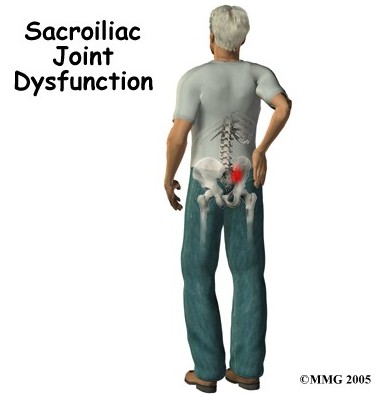
I incurred what I refer to as an under-use injury when I flew from Frankfurt to Toronto this fall and due to 8 hours of inactivity my sacroiliac joint locked up. If you use a laptop my tip is, move your laptop to a height from which you have to work from a standing position. Another benefit of standing while on-line is that you are less likely to find yourself aimlessly surfing or getting sidetracked in cyberspace.
Sitting at my desk for 7 hours of work aggravated this state-of-affairs and was at times painful. Naturally, I felt great when I was running, with its massaging motion! The sacroiliac joint eventually let up, in part due to a routine of regular walks at noon hour. It is my view that noon hour walks are one of the most under-used exercise opportunities there is. Lunch can be eaten prior to a walk with no digestive troubles and a quick lunch can leave you with up to 50 minutes for a brisk or leisurely walk. Whatever the pace, it is a quantum leap from the alternative of SITTING in a lunchroom to break up a day of SITTING at your desk or sitting in a lunchroom. I formed the habit of having a pair of running shoes designated for walking, by my desk. And you don’t have to miss out on socializing with workmates if you invite colleagues to join you.
Lunchtime Walks in Hogg's Hollow
When the weather worsens, I make use of my metropass to travel underground to different Starbuck’s locations. The air is not as fresh as an above ground walk but at least you are movin’ and have the chance to do some stair climbing.
I am a firm believer in taking a full hour for lunch when at all possible. I find the break, makes me far more productive in the afternoon. I would rather take that hour and stay late, when work piles up, than skimp on a lunch break. I have indulged in noon hour walks even on days when I have run a few miles in the morning and then 8 miles home from work. A walk is like a third workout for me while marathon training.
Too much SITTING when not balanced by movement is a degenerative activity and with the computer, left, right and centre of our lives, proactive measures are needed to counteract the ill effects of the inactivity it engenders.
It is no surprise that a so called, Fat Habit #3 has been identified by one writer as Not Multitasking While Watching TV. My mom had strong views about television. She once issued a list of shows that were banned in our household; on that list was one of our favourites, Get Smart (we loved that show!), although I don’t think this regime really took hold as she had strong views but was not particularly strict.
She also insisted that we be involved in other activities while watching TV. Thus, I would draw, sew and sometimes iron to satisfy this criteria. I carry the multi-tasking habit with me to this day. Thank you mom!
I’ve already blogged about Dave Allen, guru of productivity and positioned the goal of the quest for finding more time, as finding time to run more miles. After some thought it dawned on me that in fact, it is not about finding time to run, or the time to run more miles because running is a part of my daily routine, like brushing my teeth. It is about finding the time to do all the other things I love to do.
Those “other” things don’t have the magnificent health benefits of running, which explains why they don’t fall into the “like brushing my teeth” category. For example, I love to garden and if gardening had the same health benefits of running, it would definitely give running some stiff competition for my time. That being said, I do believe there are many mental and physical benefits to gardening but that’s a whole other discussion.
I have a voracious appetite for time management books and books on getting organized. I definitely have a bent towards systems and organization, scoring 21 out of 22 on my Meyers Briggs test on that count, referred to in the MB context as Judging (not to be confused with judgmental). Friends often laugh at me when I say, “I have a plan” . . . so what else is new they chuckle. This is a very clearly defined aspect of my personality and statements such as the ones below reflect this approach to the external world. I believe it makes me a good match psychologically with the demands of marathon training.
# I like to have things decided.
# I appear to be task oriented.
# I like to make lists of things to do.
# I like to get my work done before playing.
# I plan work to avoid rushing just before a deadline.
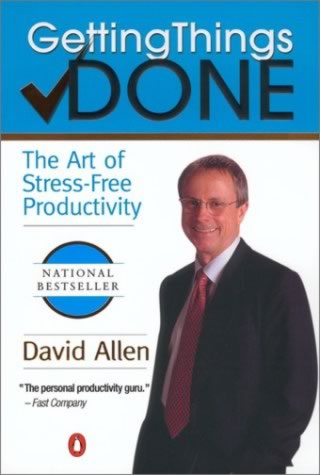
Lately, I’ve been listening to Dave Allen’s first book Getting Things Doneon my IPod. Both this and his second book, Making It All Work are available on ITunes. I’ve read it before but it is definitely worth a reread. One thing that struck me was his statement, “You can only feel good about what you are not doing when you know what it is that you are not doing.” He maintains that unless we unload all the things-to-do that are cluttering up our short term memory we cannot do the best thinking our minds are capable of.
Getting Things Done
Whatever your goals for 2011, I recommend that you consider Dave Allen in print or audio to Make It All Work!
If you started your day with a chocolate, raise your hand please. And carrots?
Today is the day that I try and remember how bad it feels to overeat with the inevitable sluggishness, torpor and lethargy that follows. I did well in the early part of yesterday with a mandarin orange, banana, YOP yogurt drink, grapefruit juice but after my late-morning run I had a large turkey dinner and finished off with more than half of a fair sized chocolate bar. The fatigue of overeating ensued and I had to take a little nap. Bonking on a blood sugar high is not the way I really want to spend my time.
Heading out for a run in High Park
Busted!
For the third time in the past seven days I ran with my Saturday pals. This may be a record for us. I appreciated their availability as I find it far more difficult to get out the door when I have all day to run. Too much choice seems to lead to much procrastination. I resisted a momentary urge to have chocolate before my run and returned from my 7 miles with thoughts of a healthy breakfast.
Carrots for breakfast, yum!
Earlier this month I learned of a Carrot Cake Oatmeal recipe from a friend’s blog Frugal ‘n’ Fit, who learned of it from another food blog called Oh She Glows. I have always been an oatmeal lover and my early days of marathoning involved double bowls of oatmeal for breakfast. Here is my adapted version of the recipe with a holiday twist.
* 1 cup regular oats
* 2 cup almond milk (or any other type of milk)
* 2 tsp pure vanilla extract
* 2 large carrot, finely grated (1 heaping cup)
* 2 tbsp whipping cream or coffee cream
* 1/2-1 tsp ground cinnamon, to taste
* 1/4 tsp ground ginger
* 1/8th tsp ground nutmeg
* Pinch of kosher salt
* 1 tsp fresh lemon juice
* 3 tbsp pure maple syrup
* 2 tbsp crushed walnuts, divided
* 1/4 C. coffee cream or whipped cream + 2 tablespoons maple syrup (to drizzle on top)
* Shredded coconut, for garnish
* Cinnamon, for garnish
* Raisins and coarsely chopped pecans, for garnish
Lynn’s Cranberry Sauce Add one bag cranberries, zest of one orange and juice of two oranges to a microwavable dish. Microwave at high for 10 minutes and then at medium for 5 minutes. Add sugar to taste (1 cup or more).
Directions: Finely grate the large carrot to yield 1 heaping cup of grated carrots, using the fine grate, so carrot shreds are very small.
In a medium sized pot over medium heat, add almond milk, lemon juice, and cream. Stir well. Add spices (cinnamon, nutmeg, and ginger) and salt. Stir until mixed.
Stir in grated carrots and oats. Adjust heat if necessary or reduce heat to low if mixture boils. Cook about 8 minutes, stirring frequently. When mixture has thickened, stir in vanilla extract and 2 tbsp of maple syrup. Remove from heat and pour into a bowl.
Top with pecans, raisins, coconut and a dollop of cranberry sauce. Mix cream + maple syrup mixture and drizzle over top. If desired, sprinkle with cinnamon to garnish. 3 servings
Homemade cranberry sauce goes with everything
The original version of this recipe calls for coconut cream instead of cream but we only had coconut milk in the house. When my friend posted the recipe I commented that the original recipe is quite high in calories. A whopping 1200 calories for one large serving. I’ve doubled the recipe and consider it enough for 3 medium servings. I would estimate that each serving has 700-800 calories which is still quite high but at least you get your carrots and ingredients that will metabolize more slowly than chocolate.
I stepped on the scale today and was pleased to see that my weight is in the right zone to ensure that my clothes fit comfortably. As someone who suffers from eczema, tight waistbands can trigger a round-the-waist rash. I have the good fortune to suffer the most minor of bodily insults due to running such as eczema triggered by my heartrate monitor strap and very dry and cracked skin on the heels. Others like my husband are not so lucky.
Crescent cookies, a favourite of family and friends
I ran 7 miles today with Saturday Run regulars. Thanks to holiday excess I woke late and felt fairly sluggish upon rising and throughout the morning. A sluggishness caused in part, no doubt by a diet that seems to be at least 50% percent sweets and chocolates. My breakfast was a few pieces of my mother’s stained glass torte, which is bits of green and red jello set in creamy mousse atop a crust of graham crackers. I indulged in several of the three types of cookies I’ve baked, a selection of chocolates from Chocolate Arts and a slice of chocolate ice cream cake. We have been living off the remains of the family Christmas dinner we hosted. I had turkey for lunch but thanks to all the sweet treats and much pate, I did not feel the need to have dinner.
My famous candy cane cookies
I hope to eat more healthily tomorrow, or at least for half of the day. Good luck to all in the quest for a balanced diet through the holidays. It is never too early or too late to become more active.
It occurs to me that like doing “minutes” writing about a race experience is a lot easier when done right away.
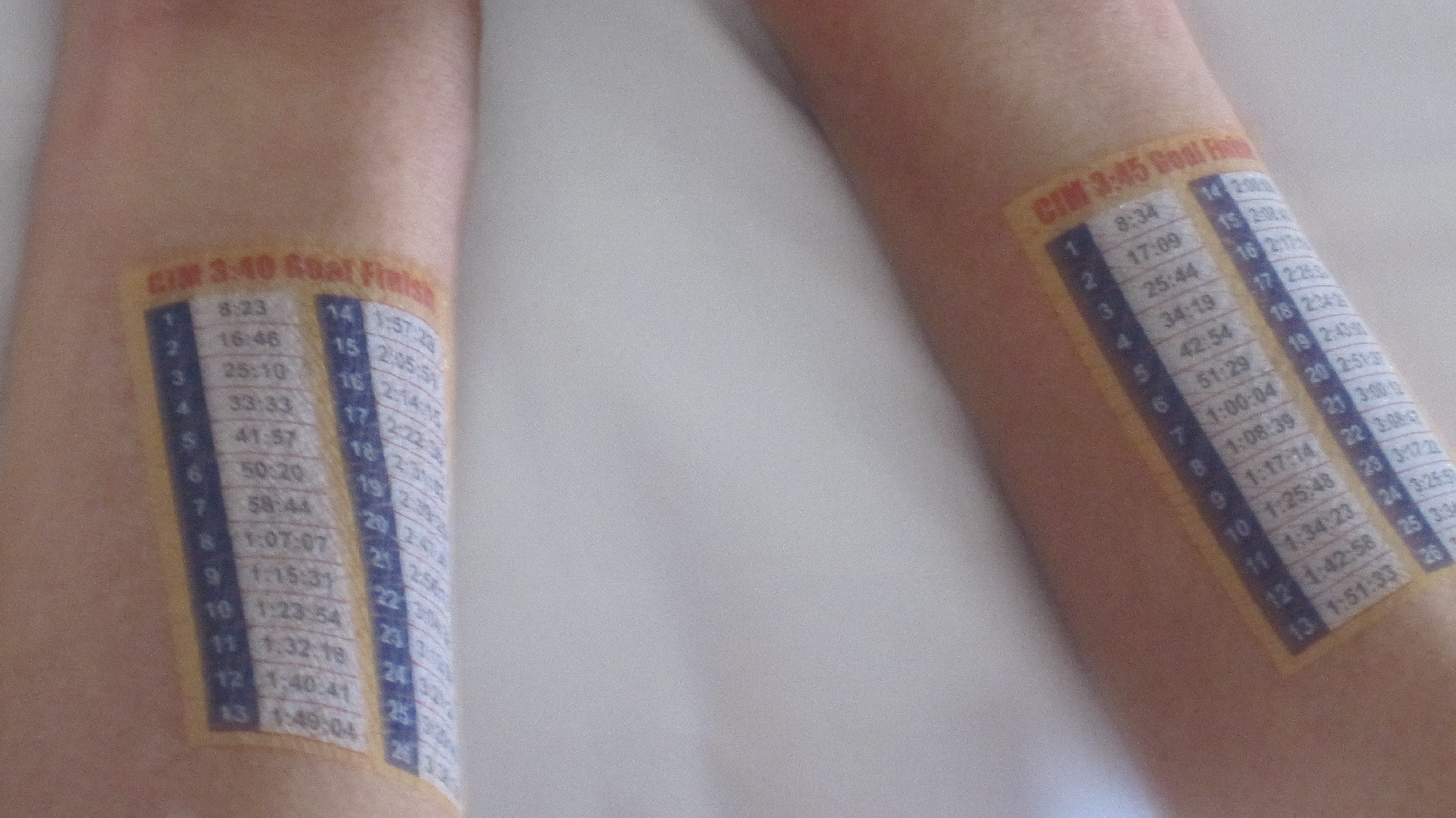
My state of mind at the halfway point was very good. I tried to focus on each mile and I felt hopeful that I might be able to go under 3:40 which was my dream goal. I found myself looking forward to hitting the 20 mile point and proving to myself that I would NOT hit the proverbial wall. I wish I could give a blow by blow account of my splits but my inability to read the fine print on tattooed on my wrists created a bit of confusion. In spite of running well within my heart rate comfort zone for the first half of the race, my pace slowed through the race.
Before the 20 mile mark I realized that the race bib pinned to my shorts was a bit askew. I was worried that this might result in no race photos as they used the bib number as the identifier. So, for the second time I had to undo the four safety pins and attach the race bib to my sports bra.
My average pace for the first 5.9 miles was 8:08 and I slowed to 8:16 between 5.9 and 13.1 miles. From 13.1 to 20 miles my pace was 8:23 and then the most dramatic slowdown was between mile 20 to the finish where my pace averaged 8:55. It didn’t feel like I had slowed that much because I passed 277 runners and was only passed by two runners between mile 20 to the finish. One of the two runners that passed me was a guy who was pacing a young woman, the other runner that passed me.
So at some point after 20 miles I realized that I was not going to go under 3:40. I worried that I might not go under 3:45 but although I was getting slower, I pushed harder. My heartrate monitor had gone on the blink around mile 20.
Around mile 22 I passed a woman with grey hair who I thought might be in my category and indeed that was the case. She ended up finishing a couple of minutes behind me. I dye my hair so it might not be so easy for another 55-59er to spot me from the rear. The fact that unlike the open men or women, age-groupers can’t tell who their competition is fairly odd. In triathlons, age-groupers have their age-group written on their legs.
Around mile 24 I passed by a water station where every single marathoner was walking. It was in fact, a little hard to get through that section. I find it surprising that so many people, slowed more than I did. I guess I’m used to running with a faster, more experienced crowd and relative to my time, I have far more experience with the distance, than the 3:40+ marathoners I was running with.
I wish I could have something dramatic or funny to say about the race, like the author of What I Talk About When I Talk About Runningwho found himself counting the dead cats and dogs when he ran the original marathon route in Greece. I suppose the lack of drama in my account is partly to do with this being a “getting-back-in-the-game” effort rather than a full out race. Nonetheless the final mile is always something special but I’ll save that for the final installment.
And we are off – sort of. Although I was only 20 meters from the start line where the transponder chip attached to my running shoe registers my start time, it took me 37 seconds to get there, more than the 23 seconds it took me to cross the mats at the Chicago marathon. So there you have it, the distinction between “gun” time and “chip time”.
Transponder chip, tied to running shoe
Concerns going into the race; would my heart rate watch behave, would the hitherto unknown sports drink Ultima throw off my usual routine of marathon beverage consumption, would I be able to read my pace tattoos with my rapidly deteriorating middle-aged vision and would I experience foot cramps which I’ve had bouts of recently.
Pace tattoos in place
Following the advice of the three, 27 time-CIM-runners I took the significant downhill in the first mile very easy. I was relieved to see my heart rate register on my watch as the night before I realized that I had brought the more complicated watch of the two I own, the one that I don’t really know how to operate. I had frantically downloaded the manual and spent much time pressing this button and that, each press triggering a high-pitched beep, to my husband’s dismay as he quietly read. Together we were able to get the watch into a mode that would display both the heart rate and elapsed time.
I missed the one mile marker but was running around 8:25 pace at the two mile mark and it felt quite easy. I noticed some runners stop at porta potties and realized that I too, had to pee. Canadian masters legend Diane Palmason suggests that you should drink continually up until an hour before a marathon. And then, have another drink 10 minutes before the marathon. I had forgotten this and so I spent the next 8 miles in search of a porta potty with no line-up or a some sort of private spot a little forest or such. In spite of this slight discomfort the pace was very comfortable as I ran with my heart rate from 140-145. At this point I had no trouble keeping my heart rate under 145. What was interesting is that a few times my heart rate went down to 135 a lapse of concentration perhaps.
The weather was turning out to be perfect. I had tossed my hat at the one mile point and knew that it would not be long until I would feel the need to take off my vest. That would be a complicated maneuver as my race number was pinned to the front. But, first I had to find a pit stop. Shortly after mile ten we went by an industrial park which had a freestanding brick wall as part of the landscaping. I had no choice but to quickly and discreetly duck behind this makeshift porta potty. Ahem, well on the subject of TMI my husband overheard the following conversation on marathon day. A woman was explaining to her male companion how she had made a pit stop but that her muscles were very tight and she could only pee very slowly. The lack of modesty shown by long distance runners in discussing these matters has something in common with the intense physical rigours of childbirth and the willingness of participants to discuss the details thereof.
Race bib
The logistics of removing my vest while running loomed. I relaxed into the race for a couple of miles and then tackled undoing the four safety pins holding the race bib in place and redoing these same pins to attach the race bib to my shorts. Then I removed the vest and tried unsuccessfully to tie it around my waist. There was not enough length to do this. So I put placed the vest around my waist and fastened the lower part of the zipper so it encircled me. Then I twisted and twirled the vest so that it fit snugly around my waist. You may ask would it not have been easier to just stop. Well, as I write this I wonder too.
I ran the rest of the race in my short,shorts and sports bra, a racing outfit that my son used to refer to as a bathing suit. Consider the embarrassment of teenager who has a mother who has raced down Yonge street in her bathing suit. Now that I’m closer to 60 than 50, I do not feel inclined to expose so much of my body and avoid this “bathing suit” look when at all possible. However, such were the weather conditions on this day and with all that training on the line, the seconds gained by cooler body temperature won out over vanity and dignity.
As for the race tattoos. I should have given more thought to their placement as they were virtually unreadable in spite of pulling my skin this way and that. Bottom line, print too small for middle-aged eyes. I should have stuck to my old method.
So the first half passed with much distraction. My time for those 13.1 miles / 21.1 km was 1:48:19. It felt great to be able to finally focus on the race. And as they say for the marathon, the race really begins at mile 20.










 Mind, Motion & Matter