
Mind, Motion & Matter

Running, Essentially . . .


Leave a comment

Spend your energy wisely!

The title of this blog was originally the title of an article I wrote on heart-rate monitor training. One of these days I will retrieve this article which resides on the hard drive of an old computer; but for now a few thoughts. A runner wishing to gain fitness, is well-advised to train with a heart rate monitor and arm themselves with their personal heart-rate-training-zone statistics. Just as you would not want to spend more dollars on a item than necessary, so too, most would not want to expend more energy than necessary to get fitter and faster. The cost of this over-training or hyper-training is most often injury.

Detroit marathon

Detroit Marathon 3:11 finish on Ford Field

I had lactate threshold testing done at the Endurance Lab in Toronto as something of a guinea pig. Training zones for individuals are quite variable and tables for training zones express an average only, which can can vary up to 20 beats or more from one person to another. With your personal data you can incorporate threshold running or tempo runs, along with speedwork (near maximum effort) in quantities that will help you to run faster at the minimum energy expenditure. Running at the minimum, means less stress to the musculo-skeletal system, which is most often a runner’s weak link. Find out more about the test itself by clicking on Endurance Lab.

Having run for a decade or so with a heart rate monitor, I had developed a sense of what my training zones might be. Prior to getting the results I made some guesses as to my zones and Adam Johnson who administered the test conceded, when reviewing the results, that he probably was telling me what I already knew. That may have been so, however in addition to the decade of training with the monitor, I had an additional 15 years of marathon training experience and an intuitive sense of how to use a hard-easy training regime.

Back in the day, the early-eighties, specialized running gear was hard to come by. Some frugal runners, like me, took pride in the low cost of the sport and thought it frivolous to designate a regular pair of mitts to running, and wore socks instead of mittens. While today’s gear might make training more comfortable, affordable heart-rate monitors and lactate threshold testing are at the top of my list of how to maximize fitness dollars and improve your understanding of how the body works.

Recommended: Polar heart-rate monitors, a starter version can be had for about $100. The New Balance store will handle any repairs or battery changes for Polar products in (roughly) 10-14 days. Invented in Finland in 1977, the first wireless Heart rate monitor was used as a training aid for the Finnish National Cross Country Ski team.

Leave a comment

Celebrating 30 Years

This is my 30th year of running.  My first goal was to run a marathon when I turned 30 but I ended up running a marathon a few months later at age 26.  It was my first long-distance race ever!  There were no run clinics back then so I used the 3 month marathon training program published in Runner’s World.

Sunday September 12th is the 30th anniversary of the Terry Fox Run. The Terry Fox Run was the first measured route that I had ever run.  Years later I organized Terry Fox run sites at my son’s school and at our neighbourhood YMCA.

Behemoth

See full size image

Tiny

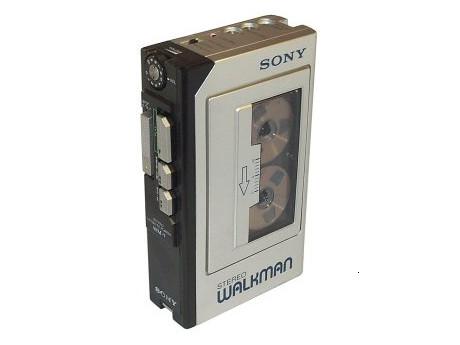
30 years ago the Sony Walkman which played cassette tapes, first began to appear in North America at high-end electronics stores like Brack Electronics.  One of my brothers worked at Brack Electronics and I was the first kid on the block to own one.

I wonder sometimes if I was the first runner in Toronto to run with a Walkman.  This thing was huge, about 10 times as thick as an IPod, 5 times as wide and 5 times as long.  Imagine the ingenuity required to strap this thing on without the help of special belts and carrying cases.   Now I run with a camera and IPod that together are barely 10% that size.


1 Comment

Blogging towards Boston

It has been over two years since I have run a marathon. The last, was Boston 2008 and my time of 3:22 fell a bit short of my hopes.  The year before I placed 3rd in my age group with a 3:17.

My claim to fame is having qualified for Boston at the age of 50, in 3:10, the qualifying time for Open Men (under 35).  As far as I know, 3:10 remains an Ontario age-group record for the marathon.  The qualifying time in my age-category is 4:05.  I’m planning to run Boston 2011 so it is time to start building mileage and inject more intensity into those miles.

Boston marathon 2008

Here I am in 2008, alongside some of those “Open Category”  men.

Currently, I’m running 45-50 miles a week with little high-intensity stuff.  Where am I going to find the time to run another 20-50 miles a week?  And, the motivation to run many of those miles at a very fast pace?

The key elements of marathon training are a long run, a tempo run and interval workouts.  I don’t mind the long run.  Strangely, there is nothing I find more satisfying than the depletion following a run of 18 miles or more.  You can get hooked on that feeling.

Intervals are another story.  It seems unlikely that I will find it in me, to do the 6 x 1 mile workouts at 6 minute pace with a 2 1/2 minute break, that I did a few years back under the tutelage of my coach, former elite steeplechaser and now professor of religion, Zeba Crook. And the tempo runs of 4 x 20 minutes at half-marathon race pace?  Who was that crazy woman?


Leave a comment

Nourishing mind, body and soul

Take care of your body with steadfast fidelity. The soul must see through these eyes alone, and if they are dim, the whole world is clouded.  Goethe